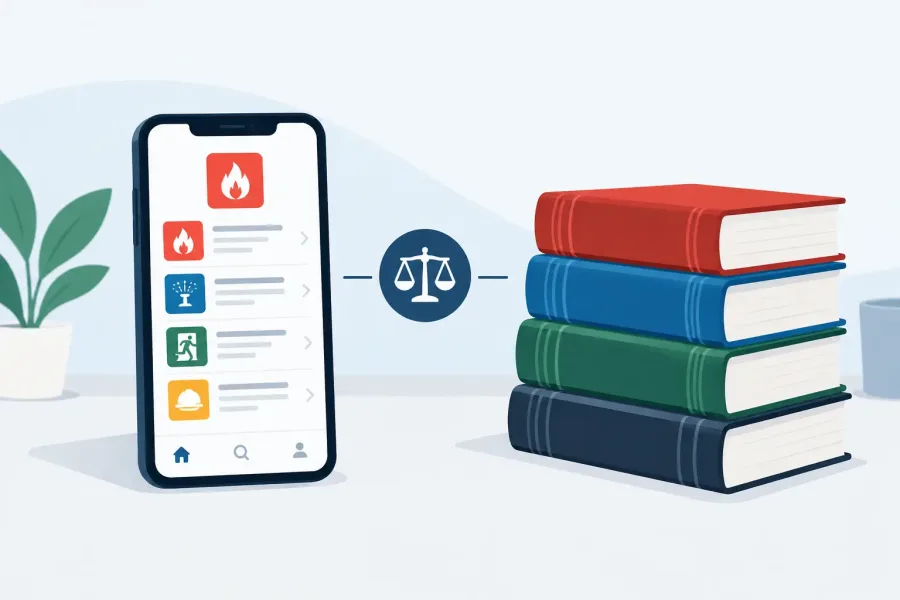
A fire alarm panel is throwing a trouble condition in a concrete mechanical room. You have a few minutes, limited signal, and a question that should not be answered from memory. That is where the NFPA reference app versus books question stops being a preference debate and becomes a field decision.
Printed standards have earned their place in trucks, offices, classrooms, and test-prep stacks. A well-built offline app can reduce the time between a question and a useful answer. Neither format wins every situation. The better choice depends on what you need to do, which edition applies, and whether you need the full standard or a fast, practical reference.
What an NFPA reference app does well
The main advantage of an app is speed. Trade work produces small, specific questions all day: spacing, inspection intervals, terminology, testing steps, wiring concepts, calculation checks, and code-related reminders. Searching a focused reference from a phone can be faster than opening a large bound volume, finding the right chapter, and scanning several pages.
That speed matters most when the app is built for actual field use. A useful trade reference should organize information around the questions technicians ask, not make users memorize a digital table of contents. Searchable topics, plain-language explanations, calculators, bookmarks, and quick category navigation all reduce friction when a job is moving.
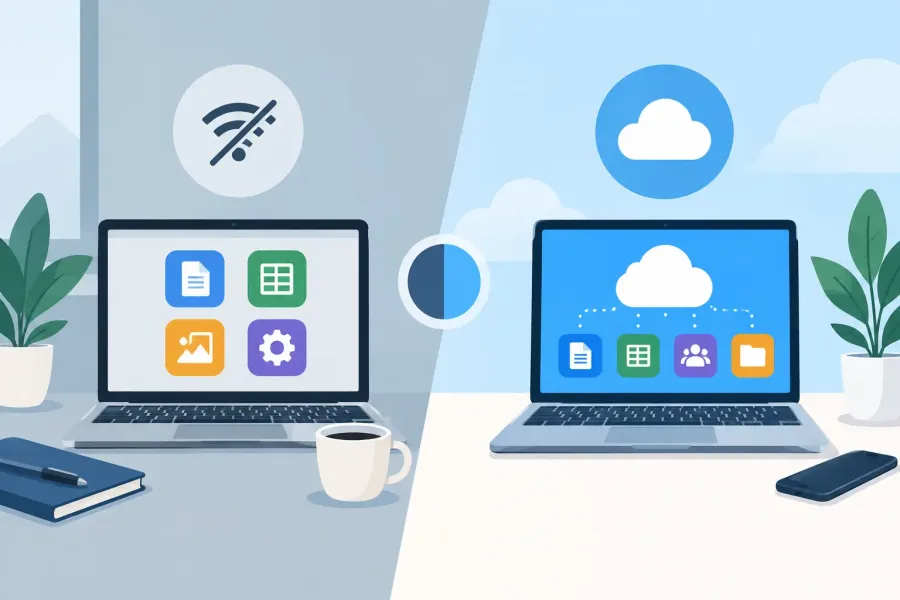
Offline access is the other major advantage. Basements, stairwells, equipment rooms, rural sites, new construction, and secure facilities are not friendly to cloud-dependent tools. An offline-first Android app stays available when Wi-Fi is absent, cellular service is weak, or a company network blocks access. You bought the tool to use it at the job, not to wait for a loading screen.
Apps also travel better. A phone is already in your pocket. Carrying a library of full-size books is realistic for an office or a service truck, but not always for ladder work, walk-throughs, or a quick site visit. For apprentices especially, a compact reference can make it easier to build the habit of checking a source rather than guessing.
Where printed NFPA books still earn their place
Books remain hard to beat when you need the complete adopted text, full context, and exact section language. A narrowly focused app may help you find a concept quickly, but it may not include every exception, annex note, cross-reference, table, figure, or revision found in the standard itself.
That distinction matters. A reference app is often a practical aid, not a substitute for the governing code adopted by the authority having jurisdiction. The AHJ, contract documents, local amendments, manufacturer instructions, and the edition adopted in your jurisdiction all affect the final answer. A technician who treats any quick reference as the last word can create an expensive problem.
Printed books also make broad review easier for some users. When studying a whole chapter, marking tabs, comparing sections, and seeing nearby material, paper gives you physical context that a small screen can hide. Many experienced inspectors, designers, and estimators prefer a marked-up book for this reason. Their notes, flags, and worn pages reflect years of real calls and real plan reviews.
There is also a trust factor. If a customer, inspector, project manager, or supervisor asks where a requirement appears, the official publication and exact adopted edition provide a clear path back to the source. A summary is helpful. The source is what settles the discussion.
NFPA reference app versus books on the jobsite
For fast lookups, an offline app usually has the edge. It is lighter, searchable, and ready while you are standing in front of equipment. This is especially useful for recurring work: inspection routines, common fire alarm terms, basic sprinkler concepts, electrical calculations, or reminders related to ERCES and life-safety systems.
For a high-stakes interpretation, books have the edge because they supply the broader language around a requirement. If the question could affect acceptance, inspection signoff, design scope, a deficiency report, or a change order, slow down. Pull the adopted edition, read the surrounding sections, and confirm the jurisdictional requirement.
The best field setup is often both. Use an app to narrow the question and get oriented. Use the official code book, licensed digital standard, or company reference process when you need to verify the final requirement. That is not carrying duplicate tools. It is matching the tool to the risk.
Exam prep is a different use case
Certification prep changes the comparison. If you are preparing for NICET, a licensing exam, or an employer assessment, practice matters as much as reference access. You need repeated exposure to question formats, weak-area review, timed simulations, and explanations that show why an answer is right or wrong.
Books are essential for learning how standards are structured and for building code-navigation skill when an exam allows reference materials. But reading hundreds of pages does not automatically create recall under time pressure. A dedicated prep app can turn spare minutes into focused work: a short quiz at lunch, a calculation review before a shift, or a timed mock exam on the weekend.
Look for realistic question coverage rather than vague promises. An app should tell you what it helps with, whether it works offline, and whether its practice format reflects the pace of the test you are taking. It should also be clear about its role. Practice questions and reference summaries support preparation; they do not guarantee a passing score or replace study of the applicable standard.
For exam work, the strongest approach is simple: study the source material, practice retrieving the information, then take timed questions until your pace improves. Books build depth. Apps make repetition easier. Both are useful, but they solve different parts of the problem.
Editions can matter more than format
A perfect app built around the wrong edition is less useful than a worn book that matches the code adopted for your job. Before relying on any reference, identify the standard, edition, jurisdiction, and task. NFPA 72, NFPA 25, NFPA 13, NFPA 70, and related documents do not update on the same schedule, and local adoption does not always follow the newest publication.
This is where users need to be disciplined. Do not assume “newest” means “enforceable here.” Ask what edition is listed in the project specifications, permit documents, municipal code, or AHJ guidance. If you work across state lines or serve multiple municipalities, keep those differences organized. A quick note in your job file can prevent a lot of backtracking.
Apps should make their coverage and update approach clear. Books should be labeled and stored so the correct edition is easy to grab. Either format becomes dangerous when the user cannot tell what version is in front of them.
How to choose the right tool for your work
Choose an app when your priority is portable, repeatable access to common trade information. It is a strong fit for service technicians, apprentices, maintenance staff, and anyone who needs a dependable reference in low-connectivity locations. An offline-first tool is especially valuable if your work takes you below grade, into unfinished buildings, or onto sites with restricted networks.
Choose books when you regularly need complete code language, deep research, plan-review context, or formal verification. Designers, inspectors, code consultants, and project leads will usually need official publications available as part of their normal workflow.
If cost is part of the decision, think beyond the purchase price. One missed detail, unnecessary return trip, or bad call based on an outdated reference can cost more than the tools that would have prevented it. At the same time, do not buy a digital reference just because it looks modern. Buy it because it answers your actual questions faster and works where you work.
TapForge Studios builds offline-first Android tools for trade professionals who need practical help without ads, subscriptions, or a reliable signal. The goal is not to replace professional judgment or the adopted standard. It is to make better preparation and faster field reference easier to carry.
Keep the full source close when the decision carries consequences. Keep a focused offline app close when the job needs an answer before the elevator reaches the next floor.